
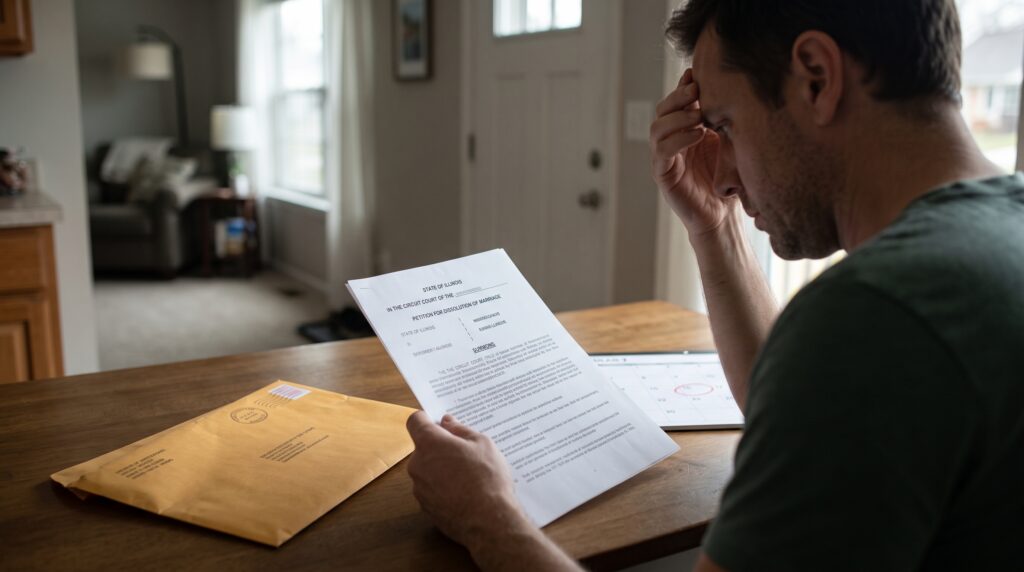
Getting served with divorce papers can be one of the most stressful experiences you will go through, whether or not you saw it coming. It is understandable not to want to respond right away.
However, you should not ignore the papers for long, because that can lead to a judgment you do not agree with. This guide walks through the steps to take after you are served.
Receiving the Petition and Summons
Getting served with divorce papers means receiving a Petition for Dissolution of Marriage along with a Summons. The petition from your spouse, the petitioner, states that they want a divorce and lists what they are asking for. That can include how property, assets, and debts should be divided, how parenting time and parental responsibilities should be allocated, and whether they want maintenance.
The summons tells you, the respondent, that a case has been filed and how long you have to respond. Read both documents in full before you decide anything.
Filing an Appearance and Answer
The summons requires you to file your answer, or otherwise file your appearance, within 30 days after service, not counting the day of service.1 Calendar that date the day you are served.
At this point you have two paths, and only one of them protects you.
Doing Nothing
If you do not respond, the court can find you in default and decide the case without hearing from you. That is true even if you agree with everything in the petition. Agreement is handled by filing an appearance and signing a settlement, not by silence.
A default can be undone, but not easily. The court may set aside a default before final judgment, and may set aside a final judgment on a motion filed within 30 days after entry.2 After that window, relief is narrower, so responding on time is far simpler than fixing a default later.
Responding to the Petition
If you disagree with anything in the petition, respond. Once a default judgment is entered, the decree controls property, debt, parenting, and support, and challenging it is harder than answering in the first place. The wise approach is to hire an Illinois divorce attorney who can handle the response and everything that follows.
What Your Attorney Will Do
- Review the petition: Your attorney reads the petition with you and identifies the areas you disagree on. That shapes how the answer is written.
- Prepare the forms: The appearance tells the court you are participating. The answer responds to each numbered paragraph of the petition by admitting it, denying it, or stating that you lack knowledge. Your attorney may also file a counter-petition so the case can continue even if your spouse stops participating.
- File with the circuit clerk: E-filing is mandatory in Illinois civil cases, with limited exemptions, and a represented party is not exempt. Your attorney files through an approved e-filing service provider.
- Serve the filed copies: Once the clerk returns file-stamped copies, a copy of your appearance and answer goes to your spouse or your spouse’s attorney in the manner the court rules require. Keep proof that it was sent.
If you were served recently and the 30 days are running, do not wait to find out where you stand. Johnson Law Group offers a no-pressure consultation to review the petition with you, so schedule a consultation and we will map the response.
If You Agree With the Petition
Agreeing with your spouse’s terms is common, and it leads to an uncontested case, not a default. You still file an appearance, then sign a settlement agreement and, if you have children, a parenting plan. How long an uncontested divorce takes in Illinois explains that path and what can slow it down.
Avoid Signing a Divorce Decree Without a Lawyer
Remember that you have 30 days to respond after being served, and missing that deadline can produce a judgment with terms you would want to challenge. Do not sign anything your spouse or their attorney hands you without having it reviewed. A signed agreement is very difficult to reopen.
Talk With an Illinois Divorce Attorney
If you have been served and are not sure what the petition means for you, Johnson Law Group is here to help.
The attorneys at Johnson Law Group will review the petition and give you a clear read on what to file and by when. Schedule a free consultation through our Illinois office, and we will serve as your North Star from here.
Sources
[2] 735 ILCS 5/2-1301(e) – Setting aside a default or final judgment on motion within 30 days (as quoted by the Illinois Appellate Court) | https://www.illinoiscourts.gov/files/1192314_R23.pdf/opinion