
What are Mediation and Litigation Pros and Cons for Colorado Family Law Cases?
Navigating family law disputes in Colorado can be challenging. Naviagting between mediation and court litigation is a crucial. Each approach has its own set of advantages and disadvantages.
First, mediation involves a neutral third party. This process aims to help parties reach a mutually agreed-upon agreement. Mediation is often less formal and more flexible.
Court litigation, on the other hand, involves a judge. The judge makes decisions based on legal arguments and evidence. This process can be more structured and binding.
Mediation can be quicker and less expensive as it allows parties more control over the outcome. However, it requires cooperation and a willingness to compromise towards an agreement.
Court litigation provides a clear resolution. It can be necessary for complex legal issues. But it can also be time-consuming and costly.
Understanding the nuances of both mediation and court litigation is vital in Family Law. At Johnson Law Group, our experienced attorneys help Clients make informed decisions for their family law cases.
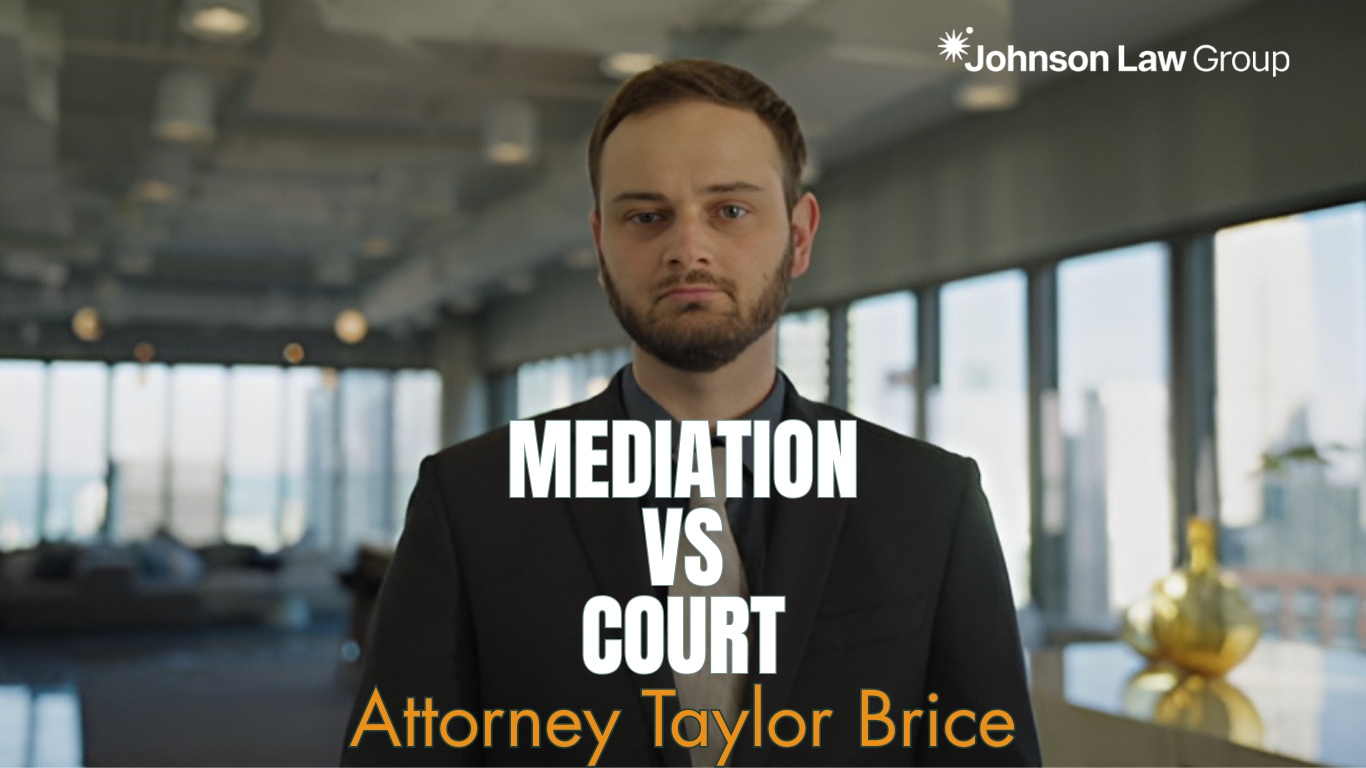
Listem to what Attorney Taylor Brice has to say about Mediation vs. Court Litigation
Understanding Family Law Disputes in Colorado
Family law disputes in Colorado can encompass a wide range of issues. These can include divorce, child custody, and spousal support. Each case presents its unique challenges and dynamics, and it is important to remember that no case is the same.
It is also important to mention that Colorado law aims to handle Family Law cases fairly. The court system provides structured procedures and legal standards. This ensures consistency and justice in outcomes.
Common disputes seen in family law include:
- Division of marital property
- Determining child custody arrangements
- Establishing child and spousal support
Each of these issues requires careful consideration of legal guidelines. At times, the court orders Family law mediation as it provides a collaborative environment for parties to resolve conflicts.
However, an experienced Family Law Attorney will recognize that mediation may not be appropriate in every situation. From the outset, some cases require court intervention to obtain an enforceable decision. Understanding the nature of your dispute is key to choosing the right path. At Johnson Law Group we take pride on our intake and onboarding process as we consider options of both emotional and practical aspects from the beginning of every family law case.
What is Mediation in Colorado Family Law?
Mediation is an alternative dispute resolution process in Colorado’s family law cases. It involves a neutral third party, known as a mediator. The mediator assists both parties in discussing their issues and exploring potential solutions.
The goal of mediation is to reach a mutually agreeable outcome. It provides a less formal environment than a courtroom. This process encourages cooperation and effective communication between the parties involved.
In Colorado, mediation is often used for various family law disputes. These can include divorce settlements and child custody arrangements. Unlike court decisions, mediation relies on voluntary agreements between the parties.
Some key aspects of family law mediation include:
- Confidential discussions
- A flexible schedule that suits both parties
- The ability for parties to control the outcome
Mediation can be particularly effective when parties are open to compromise. It fosters a more amicable resolution and can preserve relationships. In cases with power imbalances, however, mediation may not be appropriate.
How the Colorado Court System Handles Family Law Cases
The Colorado court system handles family law cases through a structured legal process. This process involves submitting necessary paperwork and participating in formal court hearings. The focus is on applying legal standards fairly to both parties.
In family law cases, a judge oversees proceedings and makes binding decisions. The judge listens to legal arguments and examines evidence presented by both parties. This ensures that each party’s legal rights are respected throughout the process.
Cases handled by the Colorado courts often include divorce, child custody, and property division. These cases are resolved in accordance with state laws and judicial guidelines. Parties must adhere to strict procedural rules and deadlines.
Some important characteristics of the Colorado court system include:
- Formality and structure
- Legally binding outcomes
- Adherence to state laws and procedures
The adversarial nature of court proceedings can sometimes heighten tensions. However, they provide clarity and enforceable resolutions. The process often feels lengthy and demanding due to numerous hearings and potential appeals.
Legal representation is usually recommended, given the complexities of court rules. The court provides a public record of proceedings, which can be crucial for documentation. For cases needing precedent or enforcement, court litigation remains essential.
Mediation vs Litigation: Key Differences
Mediation and litigation differ significantly in their processes and outcomes. Mediation involves a neutral mediator who guides parties toward a mutual agreement. Litigation, on the other hand, places decisions in the hands of a judge.
In mediation, participants have control over the result, as it requires mutual consent. They engage in collaborative discussions aimed at resolving disputes. This approach fosters cooperation, which can be especially beneficial in family law cases where there is a high net worth and a substantial number of assets.
Litigation is more formal and adversarial. Litigation involves presenting arguments and evidence to a judge to make a ruling. The judge’s goal is to make a binding decision after considering the legal merits of the case.
Some key differences include:
- Flexibility: Mediation offers more flexibility than court litigation.
- Control: Mediation allows parties control; litigation gives control to a judge.
- Privacy: Mediation is private; litigation is public.
- Formality: Litigation follows strict rules; mediation is less formal.
Understanding these differences helps parties choose the best method. Each approach has unique advantages and drawbacks based on the specific circumstances involved.
Pros of Family Law Mediation in Colorado
Family law mediation offers numerous benefits for resolving disputes in Colorado. One of the biggest advantages is its flexibility. Participants can schedule sessions at their convenience, avoiding the rigid timelines of court cases.
Another significant benefit is cost-effectiveness. Mediation typically incurs lower legal fees because it involves fewer formal procedures and less time in court.
Also, mediation fosters a collaborative environment. It encourages open communication, enabling parties to express their concerns and work cooperatively toward a solution. This approach is well-suited to family disputes where maintaining relationships is important.
The confidentiality of mediation is another plus. Unlike court hearings, mediation is private, ensuring sensitive information remains within the mediation room.
Here are key advantages of family law mediation:
- Flexible scheduling
- Possible court savings compared to court litigation
- Promotes collaboration and communication
Moreover, mediation gives participants greater control over the outcome, as both parties must reach an agreement. Think of the scenario as the parties working to create solutions tailored to their individual needs rather than accepting a court-imposed decision. This kind of collaboration, control, and empowerment may lead to more individually satisfactory resolutions.
Additionally, the mediation process can be quicker than litigation. Cases in court can drag on for months, while mediation typically resolves issues more quickly. This can lead to quick resolutions that reduce stress, allowing families to move forward with their lives.
Key benefits also include:
- Confidential and private discussions
- Quicker resolutions
- Customizable agreements
It is also important to note that the flexible, cost-effective, and supportive environment of family law mediation makes it a compelling option for many in Colorado.
Cons of Family Law Mediation in Colorado
Despite its advantages, family law mediation has its downsides. One major limitation is that mediation relies heavily on both parties’ willingness to communicate and compromise. If one party is uncooperative, the process may stall and eventially fall apart making you start over.
Another concern is that mediation does not provide a legally binding outcome. Unlike court judgments, mediation agreements need the consent of both parties to be legally binding.
Here are some potential drawbacks of mediation:
- Dependence on cooperation
- Agreements are not automatically binding
- Not suitable for all cases
Mediation might not be suitable for cases with significant power imbalances or involving domestic violence. In such situations, one party might dominate the proceedings, leading to unfair outcomes.
Furthermore, mediation lacks the formal legal guidance provided in court. Participants may feel less protected without a judge to enforce the rules.
Mediation also does not set legal precedents. For individuals seeking a broader interpretation of law, mediation won’t provide the authoritative decision a court can offer. This limitation makes it less appealing for those needing a solid legal foundation.
Pros of Court Litigation in Colorado Family Law
Court litigation in Colorado family law presents several advantages. One of the main benefits is the formal structure it provides. Courts adhere to clear legal standards that ensure procedural fairness.
Another benefit is the enforceability of court decisions. Once a judge rules, the decision is legally binding and enforceable, providing clarity and finality.
Benefits of Court Litigation:
- Legally binding decisions
- Formal and structured proceedings
- Offers closure and clarity
Court litigation also provides an opportunity for each party to present evidence and arguments. This structured approach ensures that all voices are heard in front of a neutral party, the judge.
Additionally, the Colorado court system offers a public record of proceedings. This can be crucial for future references or for documenting the resolution of complex matters.
Advantages for Complex Cases:
- Suitable for legal precedents
- Handles complex legal issues adeptly
For cases involving complex legal matters, court litigation may be the only viable option. The expertise of experienced judges is invaluable in navigating intricate disputes. Thus, for those seeking a definitive legal resolution, court litigation can be the most appropriate path.
Cons of Court Litigation in Colorado Family Law
While court litigation provides structure, it also has several drawbacks. The process can be lengthy due to the busy schedules of the courts.
Costs are another significant issue. Court proceedings involve various expenses, including attorney fees and court costs, which add up quickly.
Disadvantages of Court Litigation:
- High costs and fees
- Time-consuming process
- Emotional stress for parties involved
The adversarial nature of court litigation often increases conflict. This can be especially challenging in family law, where emotions run high.
Court proceedings also lack privacy. Cases are typically public, which can be uncomfortable for those involved in sensitive family matters.
Additional Challenges:
- Public exposure of personal issues
- Potential for increased conflict
These drawbacks make court litigation less appealing for many. For disputes where confidentiality or quick resolution is vital, this path may not be ideal. Understanding these limitations helps individuals prepare better for what lies ahead if they choose to pursue court litigation in Colorado.
Mediation vs Court: Cost, Time, and Emotional Impact
When considering mediation versus court litigation, costs are a crucial factor. Mediation typically incurs lower expenses than court proceedings. Lower costs stem from reduced legal fees and shortened timeframes.
The time commitment also differs notably between the two. Mediation is generally faster since it offers more scheduling flexibility. Conversely, court dates are set by the judicial system, often leading to delays.
Key Points to Consider:
- Mediation usually costs less than court
- Timeframes are typically shorter in mediation
- Flexibility in scheduling is greater in mediation
Emotional impact plays a significant role in decision-making. The adversarial nature of court proceedings can be stressful and emotionally taxing. Mediation, in contrast, fosters a cooperative environment, reducing stress for both parties.
In summary, choosing mediation over court can save time, money, and emotional energy. These factors make mediation an appealing option for many involved in family law disputes.
When is Mediation the Best Option?
Mediation is often ideal when both parties are open to dialogue. This approach works best when individuals are willing to collaborate. It fosters cooperation, which is essential for resolving disputes amicably.
Situations that benefit from mediation usually involve a degree of mutual respect. Both parties should be ready to communicate openly. Mediation thrives in environments where solutions can be reached through discussion rather than conflict.
Ideal Scenarios for Mediation:
- Willingness to compromise and communicate
- Desire for a quicker resolution
- The need for privacy and confidentiality
Mediation excels in cases with ongoing relationships. It is particularly effective in maintaining civility and understanding. Consider mediation if maintaining a relationship, even post-dispute, matters to you.
When is Court Litigation Necessary?
Court litigation becomes essential in situations where parties cannot find common ground. If tensions are high and communication has broken down, the court may be the only path forward. In cases involving serious disputes or legal complexities, court intervention is often required.
Sometimes, legal rights need firm protection. When evidence must be presented and evaluated, a court setting ensures that all aspects are considered. Litigation can also be vital when a legal precedent is necessary to guide future actions.
Situations Requiring Court Litigation:
- Inability to reach an agreement
- Complex legal issues or serious disputes
- Need for an enforceable, binding decision
How to Choose: Factors to Consider for Your Family Law Case
Choosing between mediation and court requires thoughtful consideration. You need to assess the nature of your relationship and dispute. Consider whether both parties are open to communication and compromise.
Evaluate the complexity and sensitivity of your case. Cases involving domestic violence or power imbalances may necessitate court intervention. Understanding your priorities and desired outcomes will also guide your decision.
Factors to Consider:
- Communication willingness and capabilities
- Complexity and sensitivity of the dispute
- Desired speed and privacy levels
- Costs versus benefits of each option
Frequently Asked Questions about Mediation and Court in Colorado
Many have questions about choosing between mediation and court for family disputes. It’s crucial to understand the differences and what each process entails. Here, we answer some common queries.
Frequently Asked Questions:
- What is the role of a mediator?
- Is mediation legally binding in Colorado?
- How long does mediation typically take?
- Can I switch to court if mediation fails?
- Are mediation and court records public?
Making the Right Choice for Your Family
Choosing between mediation and court for family disputes is a pivotal decision. Each option offers unique advantages and challenges. It’s important to consider factors such as cost, time, and emotional impact. At Johnson Law Group, our intake team is training to better understand what is most important to you so we can help you navigate the family law process. With a refined onboarding process, our Colorado family law legal team starts off on every case carefully evaluating important initial legal options that will be presented to you.
Ultimately, the best choice depends on your family’s specific needs and circumstances but informed decisions can lead to more satisfactory outcomes. That is what we do at Johnson Law Group all day, every day, Family Law. Whether you opt for mediation or court litigation, with Johnson Law Group bt your side each process will help you navigate Colorado family law more confidently. For a limited time we are offering complimentary initial consultations. If you need us please call 720-445-4444 or email us at [email protected].